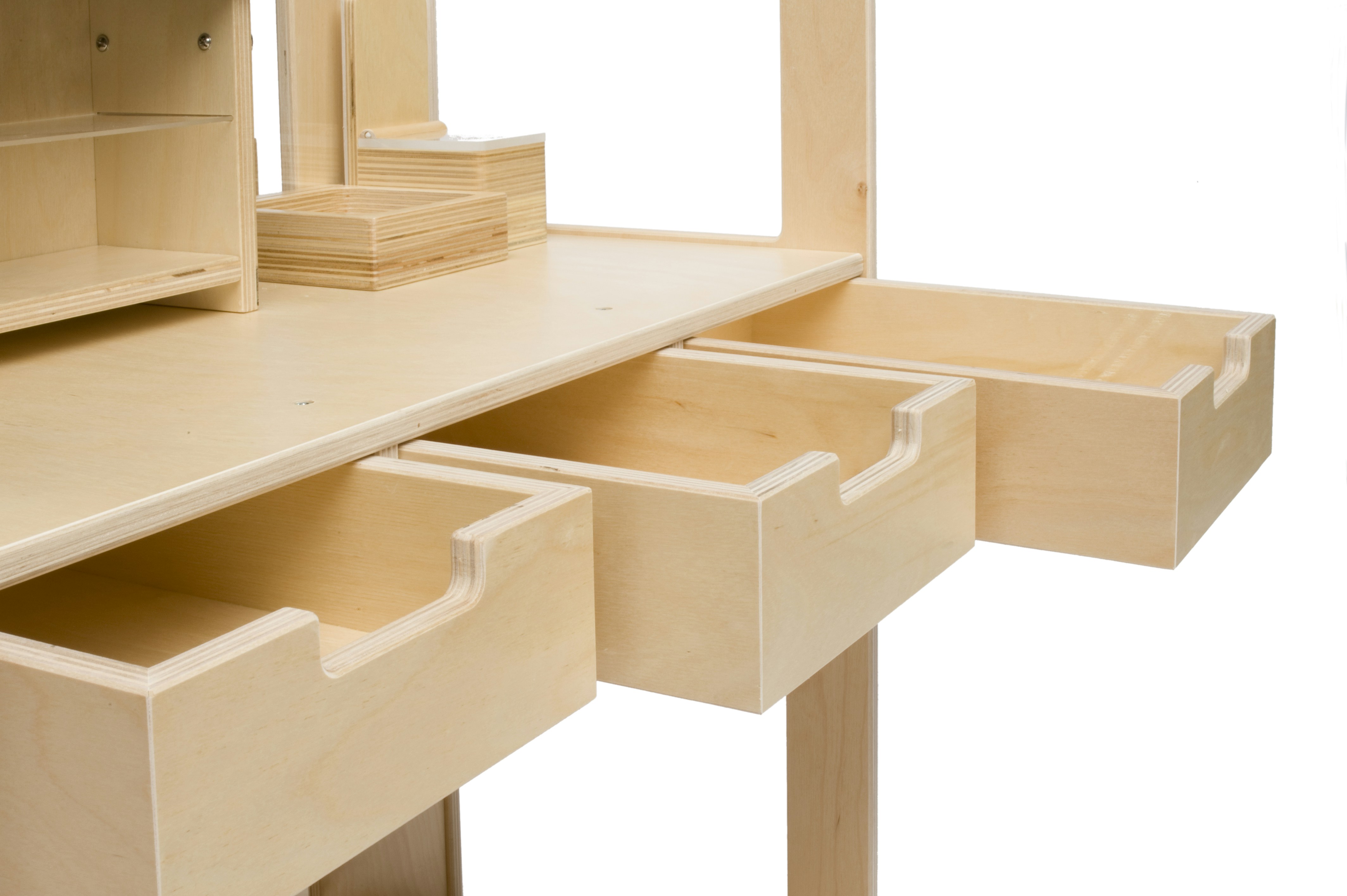
An under-desk drawer adds storage in an area that often goes unused, helping keep everyday items within reach without taking up floor space or filling the desktop. Unlike a freestanding cabinet or organizer, it can use the underside of the desk, leaving more room for chairs, movement, and other office furniture. This can be especially useful in a compact home office, where preserving open surfaces and clear walkways makes the workspace easier to use.
The drawer can hold stationery such as pens, sticky notes, scissors, and spare paper, along with chargers, cables, notebooks, small tools, and personal essentials. Keeping these items nearby reduces the need to search through bags or walk to another storage area during the workday. A concealed compartment can also make a desk look tidier by hiding loose objects when they are not in use. The result is not necessarily a fully minimalist setup, but a more orderly surface that is easier to clean and maintain.
Before choosing a model, consider how it will fit beneath the desk and affect legroom. Measure the available clearance, including the space needed for knees and chair movement, and check that the drawer will not interfere with a support rail or other desk components. Desk construction matters too: some drawers require screws, while others attach with clamps or adhesive, and not every surface can support each mounting method. Compare storage capacity with the items you plan to keep close at hand; a shallow drawer may suit small supplies but not bulky accessories. Finally, decide whether a fixed drawer or a removable option better fits your routine. A fixed unit offers a stable, integrated solution, while a removable one may be easier to reposition or take with you. Balancing access, capacity, installation, and comfort helps ensure the added storage improves rather than crowds the workspace.
Screw-mounted under-desk drawers attach directly to the desktop with screws, creating a stable, integrated storage solution. Installation requires measuring, marking, and drilling, so it is less suitable for desks that cannot be altered or for users who may want to remove the drawer later. Once secured correctly, these models typically resist movement better than adhesive options and can support a practical selection of everyday supplies. Capacity varies by drawer size and mounting hardware; larger models may accommodate notebooks or accessories, while compact versions are intended for pens, cables, and small personal items. They are a strong fit for permanent home offices and workstations where dependable access and stability are priorities.
Adhesive-mounted drawers avoid drilling and are generally straightforward to install: users clean the underside of the desk, position the unit, and allow the adhesive to bond as directed. Their performance depends on the desktop’s material, finish, cleanliness, and underside shape. Adhesive strength and rated weight limits also vary, and excessive loads or premature use can cause a drawer to loosen. These models are often compact, with capacity best suited to lightweight supplies. They work well for renters or anyone seeking a low-impact installation, provided the desk surface is compatible and the intended contents remain within the product’s limits.
Clamp-on drawers secure to a desk edge using brackets or a tightening mechanism rather than permanent fasteners. Setup is usually reversible and requires little or no drilling, though the clamp must fit the desktop’s thickness and edge profile. A well-fitted clamp can offer useful stability, but the drawer may shift if it is overloaded or repeatedly pulled forcefully. Capacity ranges from small organizers to more substantial trays. This type suits shared workspaces, rented offices, and desks where permanent installation is undesirable but adhesive mounting is unsuitable.
Rolling or freestanding storage units do not attach beneath the desktop, so they can move between work areas and are easy to reposition or remove. They generally require no installation beyond assembly, and their capacity may exceed that of a single under-desk drawer, depending on the unit. However, they occupy floor space and may be less convenient for items needed directly at hand. Before buying any option, verify dimensions, mounting requirements, compatible desk surfaces or thicknesses, and stated weight limits; specifications are product-specific, not universal.
Before choosing an under-desk drawer, measure the available space beneath the desktop, including its width, depth, and distance from the floor. Check the desktop’s thickness and material, since some mounting screws may be too long for a thin surface or unsuitable for glass and certain composite tops. Look for braces, crossbars, control boxes, and hanging cables that could interfere with installation or drawer movement. Then assess knee and thigh clearance while seated. A drawer that fits on paper may still make the workspace uncomfortable, so leave enough room to move naturally and adjust your chair.
Compare the drawer’s exterior dimensions with its usable interior space. Width, depth, and height determine which supplies will fit, but wall thickness and slide hardware can reduce storage capacity. Estimate the weight of the items you plan to store and select a unit with an appropriate load rating rather than automatically choosing the largest option. Consider slide action, too: smooth, quiet glides are useful for frequent access, while stops that prevent the drawer from being pulled completely off its rails help avoid accidental removal. Metal, plastic, and wood each offer different combinations of durability, weight, appearance, and ease of cleaning.
Review the installation requirements before buying. Check whether the necessary tools and mounting hardware are included, and confirm that the fasteners suit your desktop. Clamps or adhesive mounts may reduce the risk of surface damage, while screw-mounted designs can provide a secure fit but leave holes. If cables run through the area, look for a drawer arrangement that keeps them accessible and does not pinch or conceal connections you need. Finally, decide whether quick access or discreet storage is more important. Keep frequently used items near the front, and reserve deeper or less accessible space for occasional supplies. Matching capacity to your actual belongings helps maintain a tidy desk without adding unnecessary bulk.
Once an under-desk drawer is installed, arrange it around the way you work rather than treating it as a catchall. Place frequently used items, such as pens, sticky notes, charging adapters, or a headset, near the front for quick access. Store less frequently needed supplies toward the back, and remove items that do not support your daily tasks. This simple sorting system keeps the drawer useful and reduces the time spent searching for small essentials.
Check the manufacturer’s stated weight limit before loading the drawer. Unless its rated capacity supports heavier contents, reserve it for lightweight items such as stationery, cables, and small personal accessories. If the design permits heavier objects, distribute them evenly instead of concentrating weight at one end; uneven loading can strain slides or mounting points. Small trays or dividers help keep contents in place and prevent clutter from shifting whenever the drawer opens or closes. Leave enough clearance for cables, and route them away from rails, latches, and other moving parts so they cannot snag or become pinched.
Make periodic checks part of workspace maintenance. Look for loose screws, shifting clamps, lifting adhesive, or changes in how smoothly the drawer moves, and follow the product instructions when tightening or servicing its hardware. For a secure, long-term setup, a screw-mounted model may be the best fit if drilling into the desk is acceptable. Choose an adhesive or clamp-on design when you want to avoid drilling, while a movable unit suits users who expect to rearrange their workspace or share a desk. Before buying, compare verified product measurements with the available space and confirm compatibility with the desk’s thickness, material, and underside structure. Also review the installation method, usable interior capacity, and customer feedback that specifically discusses durability and smooth operation. These details provide a more reliable basis for choosing a drawer that fits both the desk and the intended routine.