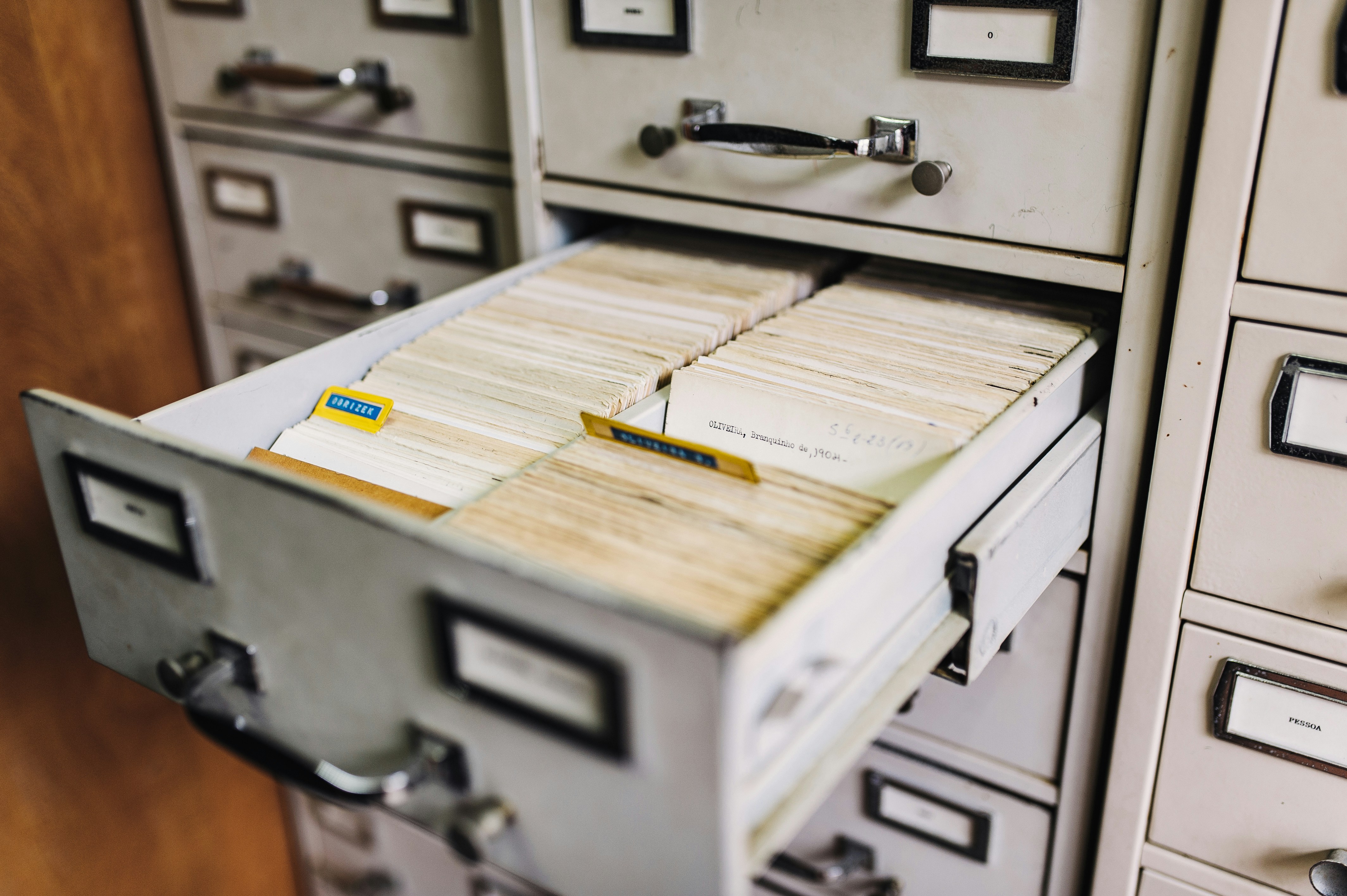
In a small home office, document storage has to fit around the desk, chair, and everyday equipment rather than claim a room of its own. A cabinet that is too deep can obstruct movement, while one that is too tall or wide may make a compact workspace feel crowded. Measure the intended location carefully, including clearance for fully opened drawers, nearby doors, and the space needed to sit comfortably. A suitable filing cabinet should use its footprint efficiently and fit beside a desk or beneath a work surface without blocking access.
Drawer capacity matters as much as exterior size. Consider both the number of files you keep and the formats you use, such as letter- or legal-size folders. Smooth-running drawers, clear labels, and an arrangement that makes frequently used records easy to reach can save time and discourage piles from accumulating elsewhere. Stability is also important: a loaded cabinet should remain steady when a drawer is open. Use anti-tip features where available, and avoid overloading top drawers, especially in homes with children or pets.
Storage needs differ significantly. Someone keeping a few household records—tax documents, warranties, insurance papers, and manuals—may need only a compact unit with one or two drawers. A home-based business handling invoices, client files, and project records may require greater capacity, room for multiple folders, and a system that supports regular retrieval. Estimating current needs and likely growth helps prevent buying a cabinet that is either unnecessarily large or quickly outgrown.
Common formats suit different spaces. Vertical cabinets store files front to back and occupy a relatively narrow area, making them useful beside a desk. Lateral cabinets are wider and allow files to be arranged side by side; they can also serve as a surface, but need more wall space. Mobile pedestals fit under many desks and provide close-at-hand storage, often with small drawers for supplies. For very limited rooms, compact desktop organizers or wall-mounted file holders can keep a small volume accessible without using floor space. The best choice balances capacity, access, stability, and the room available.
Vertical filing cabinets store documents front-to-back in relatively narrow drawers, making them useful where floor space is limited. Their compact footprint can fit beside a desk, although deep drawers may require reaching farther to find papers. Lateral cabinets use wider drawers that arrange files from side to side, often making labels and contents easier to view. They take up more wall space, but their broad tops may serve as a printer stand or extra work surface if the manufacturer permits it and the height suits the room.
Material affects durability, appearance, weight, maintenance, and price. Metal cabinets are generally sturdy and easy to wipe clean, though finishes may dent or scratch and some designs can look utilitarian. Solid wood offers a substantial, traditional appearance, but tends to cost more, weigh more, and need protection from moisture and scratches. Engineered wood can provide a furniture-like finish at a lower price, with durability depending on construction and surface treatment. Plastic cabinets are lightweight and often inexpensive, but may flex under heavy loads and can be less durable over time.
Before buying, check whether drawers open smoothly and extend far enough to reach files near the back. Full-extension or smooth-glide mechanisms can make frequent access easier. An anti-tip mechanism helps prevent a cabinet from tipping when a drawer is open; follow the installation instructions, including any wall-anchoring requirement. Lock options may provide privacy for personal or business records, but a lock alone does not make storage fireproof or waterproof. Those protections should be claimed only for models specifically certified for them.
Confirm that the drawer rails accommodate the file sizes you use, including letter- or legal-size folders, and that they can be adjusted if your needs change. Casters can help reposition a cabinet, but verify their load rating and whether they lock. Finally, review assembly requirements, package dimensions, and the cabinet’s assembled footprint. A model that fits the available space and supports the intended file load is generally more practical than one chosen on appearance alone.
For the tightest home-office spaces, a slim two-drawer vertical filing cabinet is often the most practical starting point. Its narrow footprint suits a desk nook or corner, while deep drawers can hold standard letter- or legal-size files, depending on the model. The trade-off is limited capacity and a relatively tall profile, which may make access less convenient beneath a low shelf. Measure the available floor width, depth, and clearance for fully opened drawers; confirm file-size compatibility and the cabinet’s loaded weight.
A compact lateral cabinet can work better when files are accessed frequently or include mixed formats. Wider drawers make folders easier to scan and may accommodate letter and legal files side by side, reducing the need to move documents between cabinets. However, a lateral model takes up more wall space, and its drawers can extend farther into a room. Check the exterior width and depth, drawer extension, usable interior dimensions, and stated capacity before choosing a location.
For people who want storage beside or under a desk, consider a mobile pedestal. Casters make it easy to reposition, and many designs combine a file drawer with smaller drawers for supplies. Its compact size usually means less room for records than a full-size cabinet, while casters may not roll smoothly on every floor. Verify that the pedestal fits beneath the desk with enough clearance, that its file drawer supports the formats you use, and that the wheels lock securely.
When the cabinet will remain visible in a living area, a finished wood or wood-look option may blend more naturally with existing furniture. These models can provide a warmer appearance, but finishes, construction, and file capacity vary; decorative styling does not guarantee sturdy drawers. Compare material details, drawer operation, and weight limits, especially if the cabinet will hold heavy records. Across all categories, review current product dimensions and specifications, warranty coverage, and return terms. Models and availability can change, so confirm details with the seller before ordering, and measure the intended space rather than relying on product photos.
Before purchasing, measure the cabinet location carefully, including its width, depth, and height. Allow enough space for drawers to extend fully without striking a desk, wall, or chair, and leave a clear path for safe access. Measure doorways, hallways, and turns along the route into the room; a cabinet that fits its final position may still be difficult to deliver. Check the product’s rated file size, such as letter or legal, and confirm folders fit correctly. Consider drawer extension and whether you can reach documents comfortably when drawers are open in daily use.
Organize records by category, such as household finances, insurance, property, or work, and use consistent folder labels that are easy to scan. Place frequently used documents in the top drawer or another reachable area, while archiving material consulted less often elsewhere. Hanging folders can keep files upright and make categories visible, but check that the cabinet’s rails and drawer dimensions are compatible. If hanging folders are unsuitable, use dividers or labeled folders to prevent papers from shifting. Create a simple index or digital list for less obvious categories, and review it when records are added or removed.
For safe everyday use, place heavier files in lower drawers to keep the cabinet stable, and open only one drawer at a time. Avoid overloading drawers; follow the manufacturer’s weight limits and make sure they close smoothly. If the cabinet is tall, secure it to a wall or other suitable structure when the design permits, particularly in homes with children. Clean exterior surfaces with a soft cloth and a cleaner appropriate to the finish, and periodically check handles, slides, and fasteners for looseness or damage. Remove obsolete papers regularly to control clutter. Keep confidential records in a locked drawer, and store originals or highly sensitive documents in a secure location.