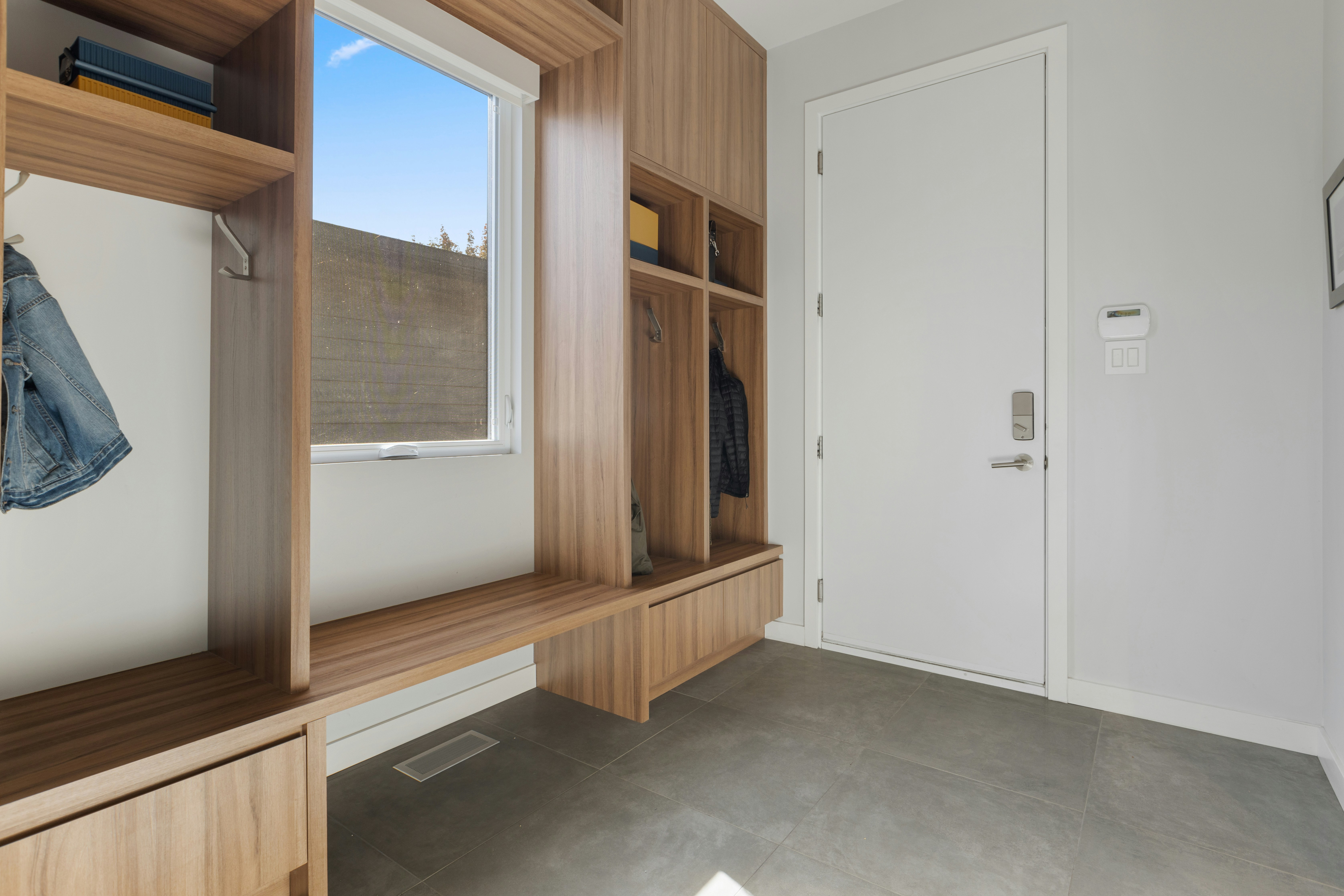
Before buying hooks, baskets, or a shoe cabinet, take time to see how your entryway is actually used. Notice which doors household members enter through and what they bring inside: work bags, school backpacks, coats, sports equipment, groceries, or pet supplies. Then look at where these items land now. A recurring pile beside the door is useful evidence; it shows where a drop zone may work better than a storage solution placed elsewhere.
Observe the busiest moments of the day, such as the morning departure rush and the return home after work or school. Pay attention to bottlenecks and routes that must stay clear, including access to stairs, nearby rooms, and the door itself. A setup that looks tidy but makes it harder to pass through will not support everyday routines. Make a realistic inventory of items that appear regularly, rather than planning around belongings that rarely enter the space.
Separate daily essentials from occasional gear. Keys, shoes, outerwear, and frequently used bags may need easy-to-reach places, while seasonal accessories or equipment used only for particular activities can be stored elsewhere. The right arrangement also depends on the household: children may need low hooks and simple containers, pets may require a place for leads and towels, and several people may need clearly defined spots. In a small entryway, vertical storage or a nearby closet may be more practical than adding bulky furniture.
Use these observations to shape a practical drop zone that fits the space and the people using it. Consider what each person needs to put down or pick up, and choose storage that makes those actions straightforward. The aim is not to create a picture-perfect foyer or to impose a new routine. It is to make the existing flow easier, keep important pathways open, and give everyday belongings a dependable place to go.
A practical entryway works best when each category has a defined home. Start by dividing the space into simple zones: coats near the door, shoes below or beside them, and bags on hooks or in a dedicated basket. Set a small tray or wall shelf aside for keys, while a labeled inbox can collect mail that needs attention. Add an outgoing-items basket for library books, returns, or anything that must leave with someone. Keeping these functions distinct reduces searching and makes the routine easier to follow, even during rushed mornings.
Assign every household member a reachable hook, bin, basket, or shelf so children and adults can put belongings away without help. Choose placements based on height and daily habits rather than appearance alone. Labels can clarify what belongs where, while color-coded containers offer a quick visual cue for people who do not yet read confidently. Keep labels simple and consistent; a picture or name may be enough. If several people share a bench, give each person an assigned section or container. This small amount of structure encourages everyone to reset the space and prevents one catchall pile from taking over.
In a narrow entryway, use vertical hooks to take advantage of wall height, and consider a slim shoe cabinet or a shallow wall-mounted shelf instead of bulky furniture. Baskets tucked beneath a bench can hold footwear or reusable bags while keeping the floor tidy. Place the items used most often—such as current coats, everyday shoes, school bags, and keys—within easy reach. Seasonal accessories, special-occasion footwear, and rarely used equipment can be stored in a closet or higher cupboard. Check the arrangement from the doorway: doors should open fully, and walking paths must stay clear of baskets, shoes, and loose bags. This is especially important in shared or high-traffic homes.
Choose entryway storage around the routines your household already follows. A sturdy bench gives people a stable place to sit while putting on or removing shoes, and a shelf or cubby beneath it can keep frequently worn pairs close at hand. Place a washable mat near the door to catch everyday dirt, and use a shallow, easy-to-clean tray for wet or muddy footwear. Select materials that tolerate repeated use and occasional moisture, such as durable wood with a wipeable finish or sturdy plastic; check that the bench remains stable under regular use.
Open baskets and hooks make quick drop-offs simple. A basket can collect gloves, hats, or small accessories without requiring a lid, while hooks at reachable heights help household members hang coats and bags as they come inside. However, open storage keeps its contents visible, so it can look untidy when items pile up. Closed cabinets or lidded bins create a calmer appearance by concealing belongings, but they may take an extra moment to open and can become difficult to maintain if items are stored without a clear system. Choose the balance that suits your preference for speed, visibility, and upkeep.
Safety matters as much as convenience in a busy entryway. Secure tall or narrow furniture to the wall to reduce the risk of tipping, and install hooks firmly, spacing them so coats and bags do not overlap or become overloaded. Keep baskets, shoe trays, and other containers out of walking paths; bins that protrude into a doorway can become trip hazards, especially when people enter carrying groceries or managing children. Measure the available area before buying organizers, then consider the belongings that genuinely need a place by the door. A small number of appropriately sized storage pieces is usually easier to use and maintain than a crowded collection of bins, racks, and hooks.
A lasting entryway routine should take only a few minutes, so it can fit into an ordinary evening rather than become another household project. Before bed, return shoes to their assigned places, hang coats, and move keys back to their designated hook or tray. Gather items needed for the next day—such as a school bag, library books, or a package to mail—and place them together near the exit. Keeping this reset consistent prevents small piles from becoming a larger sorting task. The goal is not to make the space look perfect; it is to make tomorrow’s departure easier.
Once a week, scan the entryway for stray belongings, mail, and dirt. Return misplaced items to their rooms, sort or recycle accumulated mail, and sweep or wipe the floor. Check that essentials remain accessible and the drop zone has not expanded. Every few months, make a seasonal edit: store out-of-season gear elsewhere and pass along or remove items no longer used. This keeps the entryway suited to current routines instead of letting old equipment occupy space. Share upkeep by assigning each household member one clear responsibility. Instructions should be simple and specific—children might put away shoes, while an adult handles mail.
If clutter gathers in one spot, treat the pattern as feedback. Items may need to live closer to where they are dropped, rather than in a less convenient location. Before adding a bin or hook, notice what is collecting and adjust the item’s home. A bag that always lands beside the door may need a designated hook there; mail piling up may need a sorting point and regular removal. A flexible system that is easy to reset will serve households better than a complicated arrangement that depends on perfect habits. Make changes as routines shift, and keep only the steps everyone can maintain.