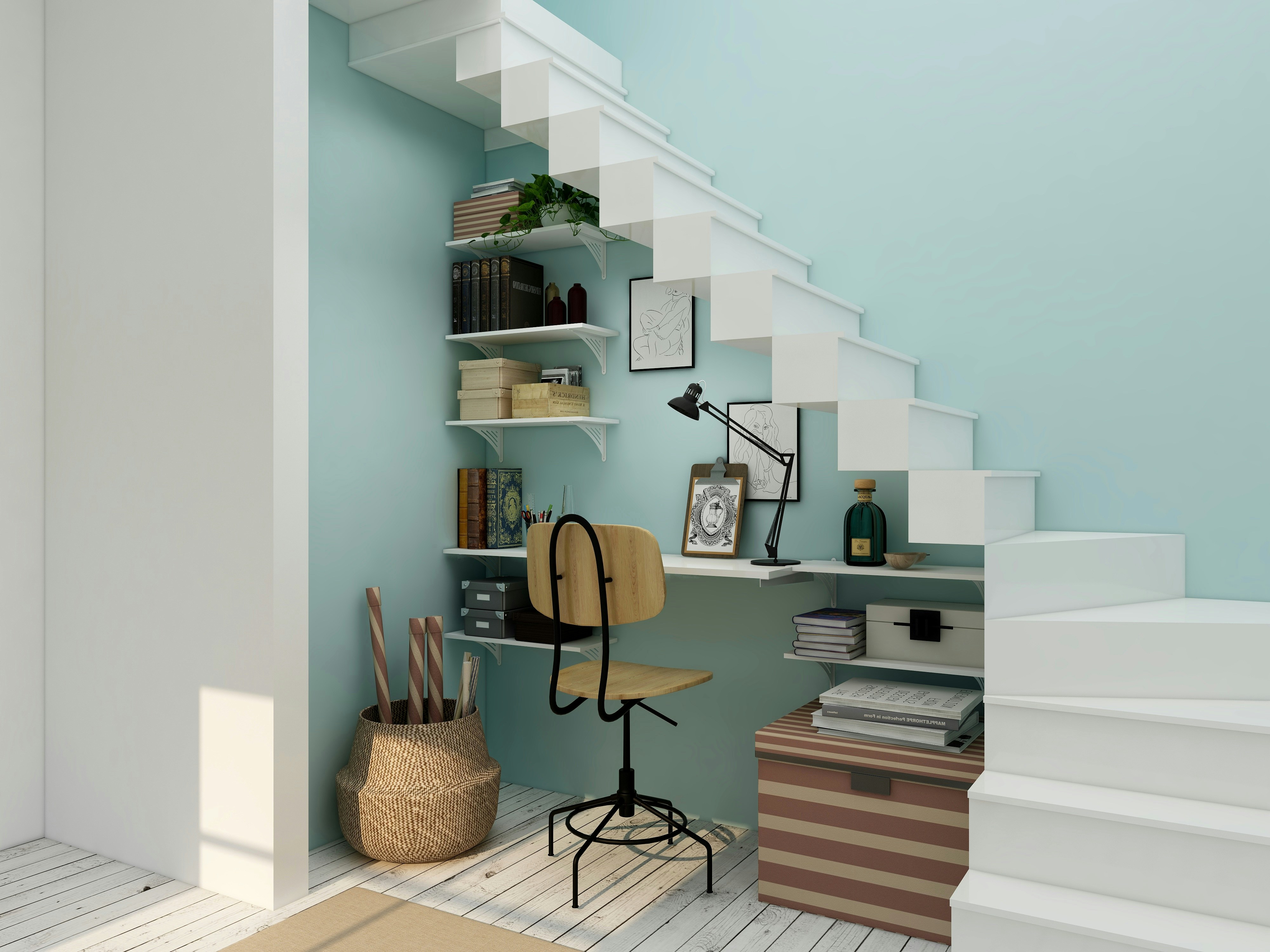
A desk is suitable for a small room not merely because it has a narrow footprint, but because it supports work without obstructing the room’s other uses. Begin by considering the tasks it must accommodate. A laptop and notebook require less surface area than a monitor, keyboard, printer, or several reference books. List the equipment used daily, then allow space to position it comfortably, rather than choosing a desk based on its outside dimensions alone. A compact workstation should make essential items accessible while avoiding a crowded surface that makes focused work difficult.
Measure the available area in width, depth, and height. Width determines how much work surface and storage can fit along a wall; depth affects both equipment placement and how far the desk projects into the room. Desk height should suit the user and chair, allowing a comfortable posture with feet supported and arms relaxed. Mark the proposed dimensions on the floor with tape, and include the space needed to pull out the chair and move behind it. Check that drawers can open fully, doors can swing freely, and walkways remain clear. These clearances are part of the desk’s real footprint, even though they are not included in the product measurements.
Room layout also influences whether a desk feels practical. A position near natural light can make daytime work more pleasant, but avoid glare on screens and leave windows accessible. Check where power outlets are located so cords do not cross walkways or require awkward extensions. Consider everyday movement through the room, including access to closets, beds, and shared furniture. The best choice balances a usable work surface with these routes and the room’s visual openness. If the desk must also function as a dining table, console, or occasional craft station, choose a design and size that can accommodate those uses without disrupting work. Ultimately, the right compact desk depends on the room, the user’s equipment, and the activities it needs to support.
A narrow writing desk is often sufficient for basic laptop work, online meetings, and short periods of writing. Its shallow top can fit along a wall or in a bedroom without dominating the room, but it may leave little space for paperwork, a separate monitor, or accessories. Before choosing one, check the desktop depth and ensure there is enough clearance for your chair and legs. This style suits people whose work setup is simple and who can store supplies elsewhere.
Wall-mounted and floating desks keep the floor area visually open, making them useful in tight rooms, hallways, or multipurpose spaces. Some models fold flat when not in use. Their main trade-off is installation: they must be secured to a suitable wall, and the wall and fittings need to support the expected load. Corner desks take a different approach, using an otherwise awkward corner to provide a broader work surface. Measure carefully, since a deep corner unit can make circulation difficult or restrict legroom.
Ladder-style desks use vertical space, combining a compact desktop with shelves above it. They can accommodate books, storage boxes, or work equipment while keeping the footprint modest, though items on higher shelves may be less convenient to reach. Compact computer desks may add a monitor shelf or keyboard tray to organize equipment and free some desktop space. These features can improve comfort, but trays may feel cramped, shelves can limit monitor placement, and the overall weight capacity may be lower than expected.
For rooms that regularly serve another purpose, a fold-down or convertible desk can create a workstation only when needed. It may be a practical choice for a guest room or living area, but the setup can offer less room for paperwork and may require clearing the surface before folding. Match the design to your routine: consider the equipment you use, storage needs, available wall and floor space, and how often the room changes function. No single compact desk style works best for every home.
When comparing compact desks, begin with construction and stability. A small footprint does not guarantee a sturdy workspace: inspect the frame, joints, and leg design, and look for crossbars or other supports that reduce movement. Solid wood can offer strength and a durable surface, though it may be heavier and more expensive. Engineered wood is often more affordable, but quality varies, especially at edges and connection points. Metal frames can provide reliable support, while mixed-material designs combine a metal base with a wood or laminate top. Choose a finish that resists everyday scratches and spills and can be wiped clean without special products.
Storage should improve function without making the desk feel oversized. Drawers keep small supplies out of sight, but may reduce legroom or make a narrow desk feel crowded. Open shelves can hold notebooks or equipment, although items remain visible and may collect dust. Cable-management holes, clips, or trays help control cords, but check that their position works with your outlets and devices. A monitor riser can raise a screen and create space underneath, yet it also uses surface area and may not suit every monitor or setup.
Check basic ergonomics before choosing a model. The desk height should allow relaxed shoulders and elbows near a right angle while typing, with enough room for both keyboard and mouse. Position the monitor so the screen is roughly at eye level and at a comfortable viewing distance; a riser or adjustable stand can help. Consider the chair at the same time: its height and dimensions should fit under the desk, and it should support a comfortable posture. Measure the available space, including clearance for chair movement, drawers, and doors.
Finally, verify the listed dimensions, assembly requirements, and weight capacity rather than relying on product photos. Confirm whether the stated load limit applies to the desktop, shelves, or entire unit, and review the return policy in case the desk does not fit or feels unstable. Customer reviews can reveal recurring concerns about wobbling, difficult assembly, chipped edges, or finish quality. These practical checks help identify a compact desk that suits the room and remains dependable in daily use.
Begin by identifying how the desk will be used most often. A laptop-only setup requires less depth and fewer accessories than a workstation for a monitor, keyboard, printer, or paperwork. Be realistic about daily tasks: occasional writing may call for a simple surface, while full-time remote work can justify more room and ergonomic features.
Measure the intended location before browsing. Record the available width and depth, account for baseboards, doors, windows, and nearby furniture, and leave space to pull out a chair. Also measure the route into the room, including stairways, hallways, and doorways, so the desk can be delivered or carried into place. A compact desk is useful only if it fits both the room and the access route.
List essential equipment and set a budget that includes any chair, lighting, or organizers you still need. Then decide which qualities matter most. Prioritize surface area for equipment and paperwork; storage for supplies that would otherwise clutter the top; portability if the desk must move; appearance if it remains visible in a shared room; or multipurpose use if it also needs to serve as a console or dining surface.
Match the format to the situation. In a bedroom used mainly for laptop work, a narrow writing desk or wall-mounted option can preserve floor space. In a shared living room, a small desk with closed storage or a design that blends with existing furniture can make the work area easier to put away visually. For a small home office with a monitor and accessories, choose a deeper surface and consider drawers, shelves, or a monitor riser rather than sacrificing necessary working space.
After choosing, arrange the setup thoughtfully. Keep frequently used items within reach, move occasional supplies into vertical organizers, and secure cables along the desk or wall. Position the desk so drawers and the chair do not block doors or walkways. Maintaining clear circulation helps the room remain comfortable for other activities. With careful measurements and priorities, a well-chosen compact desk can support productive work without overwhelming a small apartment.